
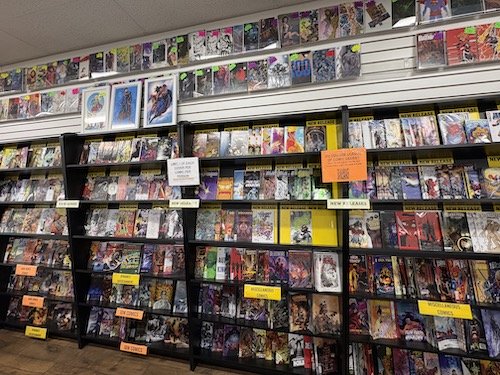
Learn the history of OC comic book shops and how they continue to thrive in a market dominated by technology.
With the surge of the Marvel Universe, most people have heard of mainstream comics like Captain America, Black Widow and Iron Man. But before these names hit the big screen, they were hard-copy comic books.
Orange County has always had a comic book scene that has appealed to everyone from hardcore collectors to Marvel movie enthusiasts and novelty connoisseurs, but what’s the history of OC’s comic scene and what keeps it alive and well through an era that’s oversaturated with tech and devices?
The History
The history of comic book shops in Orange County starts with a boom in the ‘80s and ‘90s before a slowdown due to tech advancements. The development of the Marvel Universe caused a resurgence of comics in more recent years.
“The 1990s saw a significant boom for local comic book stores, with shops like Comics Unlimited and Mile High Comics being quite prominent. While many shops eventually closed as general interest declined, the popularity of Marvel movies around 2010 sparked a major resurgence. Today, we are seeing more interest in collecting comic books than ever before,” said Darin Erickson, owner of Amazing Comics and Cards in Westminster.
Kenny Jacobs, owner of Nuclear Comics in Laguna Hills said, “In the ‘80s and ‘90s, some newsstands still offered comics in convenience stores and bookstores. Today you can buy comic books from every major bookseller, including the book fair at your grade school, but a comic shop like Nuclear Comics is the best source for recommendations and help finding just the right thing to read.”
The Evolution
With the pandemic and the surge in technology, comic book shops had to adapt to a new marketplace and type of client.
Mike Kadin, owner of Comics Toons N’ Toys in Tustin said, “Some shops kind of started switching from the high cost of brick and mortar to working out of warehouse environments or out of their house environments. The pandemic kind of trained people to use the internet for a selling platform. Platforms like Instagram. So, I think there’s actually fewer comic stores out there than there were before, but I do think that there’s currently more actual readers in comics.”
Erickson said, “Comic book stores can no longer survive by selling comics alone. Shops have evolved to include pop-culture merchandise such as action figures and trading cards. We also carry trade paperbacks, which make it easier for customers to read older stories in collected volumes.”
The Competition
The rise in technology has put many brick and mortars out of business, so how do comic book shops navigate and survive in this new type of market?
Kadin said, “One thing I think comics have going for them over a lot of other digital platforms is there’s intrinsically a value associated in them. There’s a collectible market value and then there’s older books that have obviously proven the test of time.”
He said a book can be worth 10s of thousands of dollars while things like stamps and coins come and go in terms of value. What helps is that there’s always a media platform fueling the collectibles side of things for comic books.
“On the weekends there’s a lot of casual people who come in and collect stuff on the peripherals like Funko Pops or graphic novels, and [they] kind of look for a social environment,” Kadin said.
Erickson said customer service is key to staying competitive.
“Building personal connections with regular, weekly customers — even through simple gestures like remembering their names — creates a sense of community,” Erickson said.
Jacobs said, “There are ways to buy comic books online, but we believe that there is nothing better than connecting with people in your local area to gather and talk about the medium we love. Technology is critical in every part of the business — from connecting with our customers via social media, direct messaging and email — to ordering from distributors and researching information online.” — Jessie Dax-Setkus






Leave a Reply
You must be logged in to post a comment.