
 Here are four essential things every special needs parent can do for better emotional well-being.
My phone has been blowing up with texts all morning, and when I finally have a chance to check, I see that a group text with my special needs mom friends has turned into a boisterous discussion about the perils of poop. Oh, you haven’t been in a group text discussion about poop lately? Welcome to the world of special needs parenting — where no topic is too embarrassing or awkward to share with one another. We laugh through the tears.
No. 1: Find Your Tribe
The importance of building community, your tribe, cannot be overstated for the potential positive impact on emotional health.
The darkest and loneliest times for me emotionally were in the period before I found the people that now make up my invaluable community. When my now 7-year-old son Kai’s developmental delays became significantly apparent — right around age 1 — my husband, Jason, and I were breaking down daily.
We sought a diagnosis, and after three years of countless appointments and sleepless nights, we discovered through whole exome sequencing that Kai has an ultra rare genetic disorder called Cabezas syndrome, a mutation of CUL4B, which manifests in intellectual disability, global developmental delays, lack of verbal language and medical fragility, including seizures.
Beyond my family and a very small handful of supportive friends, the expansion of my personal tribe came first through social media. I created a public Facebook page specific to Kai’s disorder, and a private family page. Jason and I were told by genetics that due to the rarity of Kai’s condition it was unlikely we’d find anyone else with the diagnosis. There are now at least 75 families around the world with a child or children diagnosed with a CUL4B mutation who have joined the group, and our numbers grow weekly.
We lean on one another in an incomparable way very specific to our unique experience. For its drawbacks, social media has the power to bring together those of almost any diagnosis or symptom.
No. 2: Learn to Recognize Your Emotional Warning Signs
It would be impossible to fully encapsulate the range of emotions that arise within the experience of raising an atypical child, except to say: It’s all of it … ALL THE EMOTIONS.
We as special needs parents are well aware that we are more susceptible to mental health challenges, from depression and anxiety to PTSD. But if we can identify our personal warning signs of emotional distress, we can often prevent them from escalating to the degree they negatively impact our mental health.
The warning signs may appear in a more subtle way than a complete meltdown. Feeling overwhelmed, irritable, impatient, short-fused, forgetful, joyless, exhausted, defensive and numb are some of the ways emotional stress surfaces.
As a marriage and family therapist in Dana Point, I regularly speak to my clients about the importance of self-care practices when these signs show up — like grabbing coffee or an evening out with a group of friends, making a date for a harbor walk or yoga class. 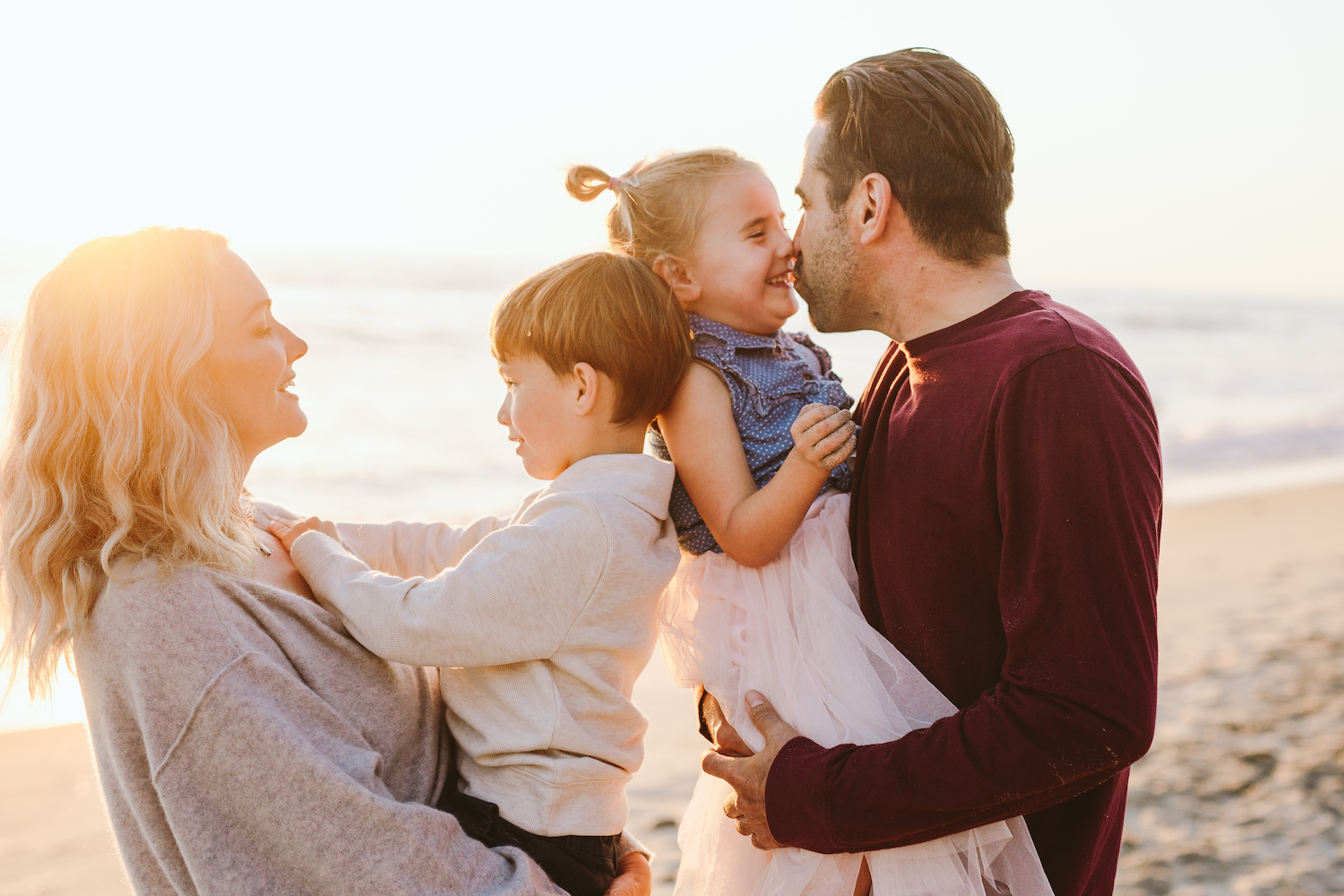
No. 3: Remember to Drop Your Armor Sometimes
I found my tribe. I know my emotional warning signs. Now the hard part: actually reaching out for the support I need. Some people are better about this than others. I myself would rather let my kids play with glitter than admit I need help.
Why? I’m embarrassed I can’t do it all. I don’t want to be a burden. I fear pity. I want to appear strong.
Attempting to live up to idealized perceptions of strength, whether from an external or internal source, usually compounds the sense of isolation, shame and guilt for a special needs parent who is struggling with the reality of day-to-day defeat, anger and grief.
It is OK to be strong and also burnt-out. It is OK to be compassionate and sometimes angry. It is OK to love our child and also admit that they can be a lot sometimes.
Try to let in those with whom you have developed a level of emotional trust.
No. 4: Seek Meaning and Purpose
Every time I hop on a train of thought toward a dark and defeated place, I think of the purpose I have gained in my life as a result of the community built with those who share my son’s diagnosis, and the work we are doing to create a more optimistic future for CUL4B disorder families. Together, we are creating a foundation, registry and working with researchers. More can be accomplished together than alone in the realm of disability and rare disease.
Our ability to vulnerably share our suffering and worries with one another has actually created a network of information in my community that no doctor at this point could ever tell us, and the beginning of a natural history collection for Kai’s condition.
It doesn’t have to be this huge. Even the smallest purposeful action can create a stronger sense of well-being. Today, my purpose was to listen and laugh with someone talking about her kid’s poop. Sometimes the smallest things can be the most meaningful for someone in the moment.
Leah Lewis is an Orange County wife, mother of two and parent advocate, bringing awareness and action to the rare genetic disorder Cabezas syndrome. She works as a marriage and family therapist in private practice out of Dana Point, specializing in individual and couples counseling for parents of children with special needs.
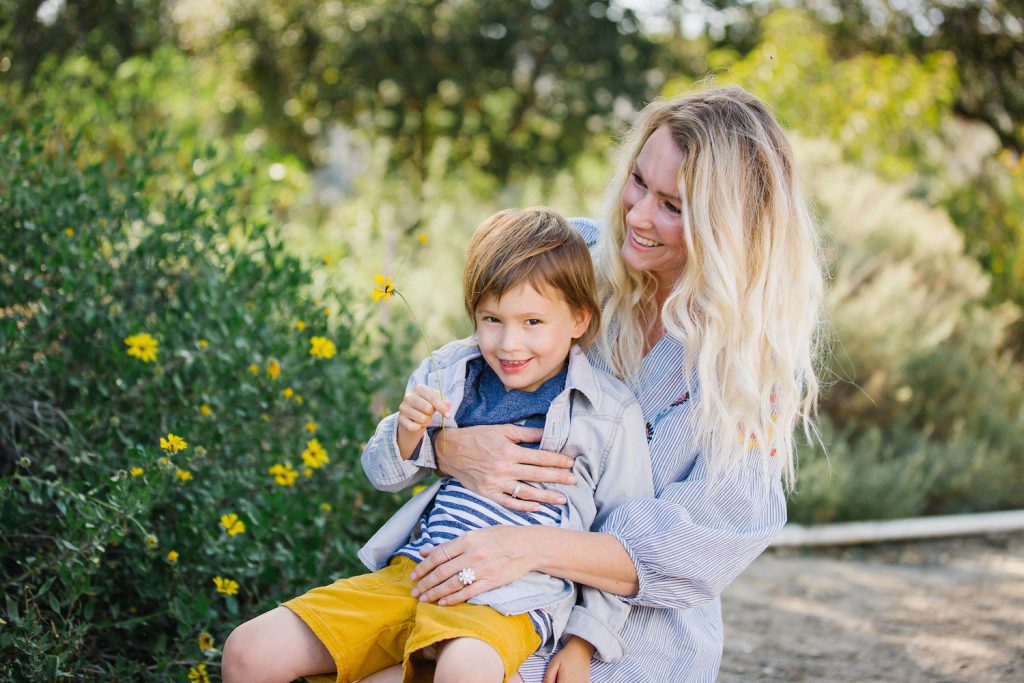
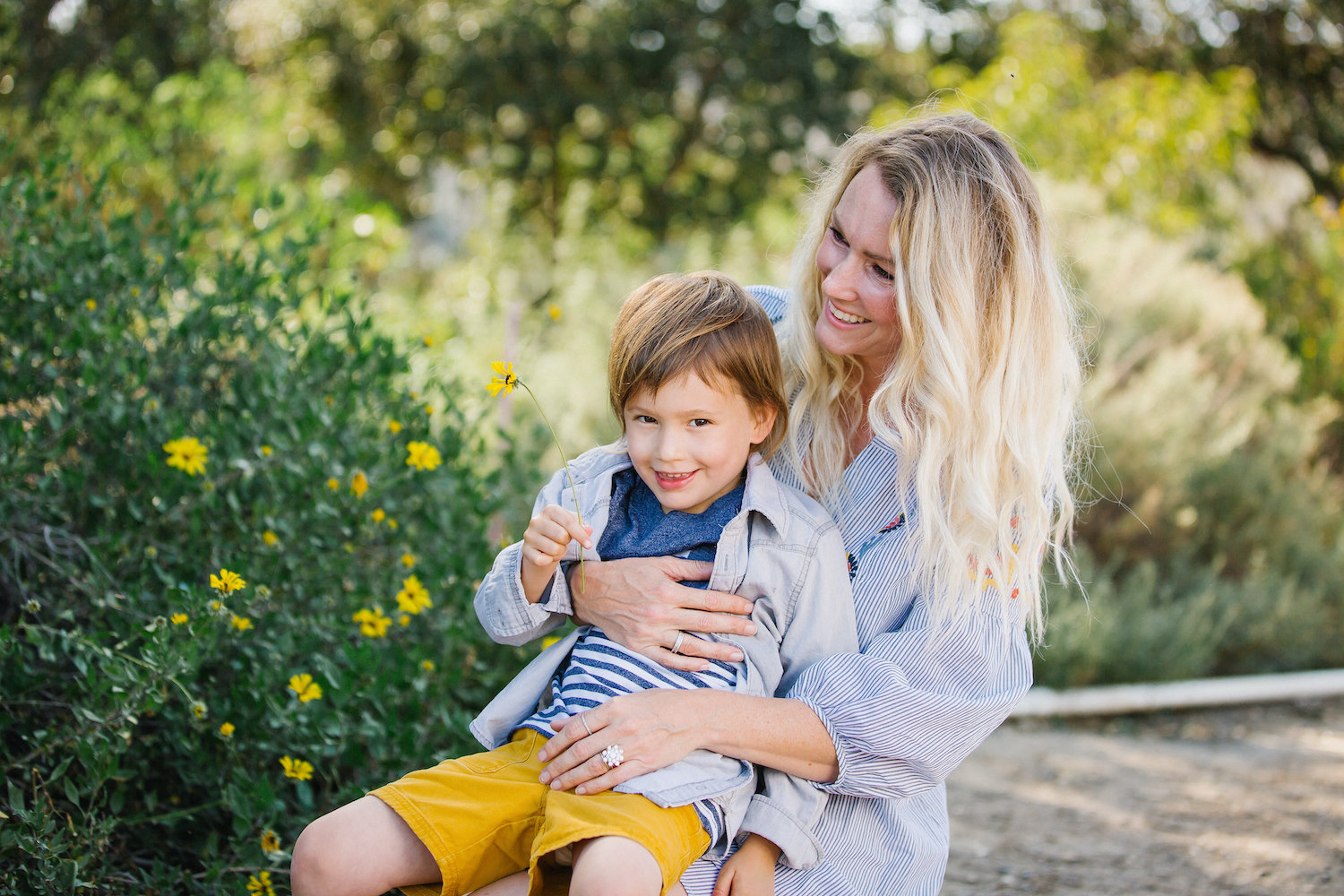
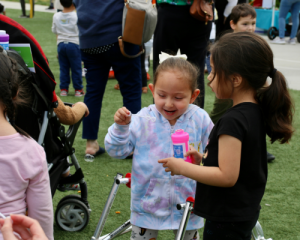
Top Photo: Leah Lewis with her son, Kai
Photo By Carolyn Ruiz
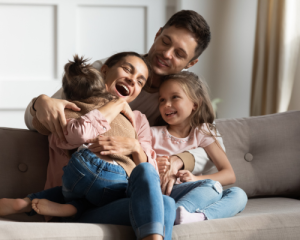
Center Photo: Leah Lewis and her family
Photo By Jesslan Lee



Robert Boyle says
Leah,
Your insight, strength, and commitment is a beacon of light to those in your same or similar situation, as well as those once removed. The dedication it takes is unimaginable. May your knowledge and wisdom help all those who are trying to make the best of what is a true commitment of love.