
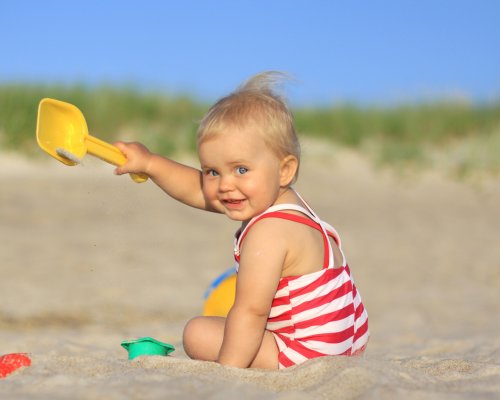
Keep these warm-weather safety tips in mind for your new baby.
There is no strict age requirement for when babies can start going outside. If your newborn is healthy, short outdoor outings can begin as early as the first week of life. However, it’s important to remember that newborns have a limited ability to handle extremes in heat, sun exposure and environmental allergens. Taking steps to prevent overheating and limiting excessive sun and allergen exposure can help keep those early summer experiences safe and enjoyable.
Preventing Overheating
A newborn or infant’s skin is more sensitive to sun exposure than that of older children or adults. Babies also have a reduced ability to regulate and release body heat, which makes them more vulnerable to overheating and heat-related illness.
In warmer environments, offering more frequent feedings of breast milk or formula can help reduce the risk of dehydration. It’s best to avoid giving babies water, since breast milk and formula provide the essential salts and sugars infants need to stay properly hydrated.
Signs of overheating include a baby who:
- Is sleepier than usual or less active
- Has a sudden onset of vomiting
- Has skin that is red or feels warm to touch
- Is not producing wet diapers every two to three hours
The first step in protecting your baby is limiting direct sun exposure. This can include choosing cooler times of day for outdoor activities, using hats, lightweight blankets or clothing, and staying in shaded areas. Avoiding or reducing time outside during peak sunlight hours — typically between 10 a.m. and 4 p.m. — can help lower the risk of overheating and sun-related skin damage. Regardless of the time of day, it can also be helpful to limit direct sun exposure to about 30 minutes at a time.
Sunscreen for Baby
Newborn skin is very sensitive to lotions, ointments and sprays, which is why most pediatricians recommend waiting until about 4 to 6 months of age before using sunscreen or similar products. For babies older than 4 to 6 months, the same sun protection strategies still apply — hats, lightweight blankets, light-colored clothing and shade should remain the first line of protection. Sunscreen can then be added as an additional layer of protection.
Spray sunscreens are generally not recommended, since they can accidentally be inhaled or get into the eyes or mouth and cause irritation. Instead, choose mineral-based sunscreens that contain zinc oxide or titanium dioxide, and avoid products with heavy fragrances, parabens or unnecessary additives. A lotion or ointment with an SPF of 30 is usually sufficient. Apply sunscreen 15 to 30 minutes before sun exposure and reapply every two hours if your baby will be outside for an extended period.
Insect Repellent
Mosquitoes, biting flies and tick bites can make outdoor time miserable. Here are a few tips to help keep your baby protected:
- Avoid using scented soaps, perfumes or hair sprays on your baby when spending time outdoors.
- Be careful around stagnant water, where mosquitoes commonly breed.
- When possible, dress your baby in breathable cotton clothing, long sleeves and long pants, especially at dusk and dawn when insects tend to be most active.
One common way to protect your baby from biting insects is to use insect repellents. However, insect repellents must be used safely and correctly.
DEET
- DEET is considered a safe and effective insect repellent and is commonly recommended for children.
- Do not use DEET on babies younger than 2 months.
- For babies older than 2 months, use a product with less than 10% DEET and apply only once per day.
Picaridin
- Picaridin products with up to 20% concentration can be used in children 6 months and older.
- It is odorless, unlike DEET, which makes it a preferred option for many families.
Essential Oils
- Some essential oils — such as citronella, cedar, eucalyptus and soybean — may provide about two hours of protection.
- However, the safety and effectiveness of essential oils are still being studied, so many pediatric experts prefer DEET or picaridin.
It’s best to avoid combination sunscreen and insect repellent products. Sunscreen needs to be reapplied every two hours, while insect repellents should not be applied that frequently. When applying insect repellent, avoid the eyes, mouth and hands, since babies often touch their faces. A helpful method is to spray the repellent into your own palm first, then gently rub it onto your child’s exposed skin.
Pool Time
Like sunscreen recommendations, it’s generally a good idea to wait until your baby is at least 6 months old before introducing swimming or pool time. One reason is developmental. By around 6 months, most babies have better head control, which makes it less likely that their head will suddenly drop into the water. They also have improved coordination of their arms and legs. While they cannot swim yet, they can begin to enjoy moving and splashing in the water.
If you do take your baby into a pool, the water should ideally be slightly warmer — around 85 degrees to 90 degrees if possible — since babies cannot regulate their body temperature as well as older children and adults.
One of the biggest risks during pool time is swallowing water or drowning. Before introducing your baby to the pool, make sure they have good head control, meaning they can hold their head up and turn it from side to side without their chin dropping toward their chest. A responsible adult should always have two hands on the baby when in or near the water. That adult’s attention should be fully focused on the baby, not on other children or distractions.
It’s also important to never rely on inflatable floaties or water wings to prevent drowning. Certified life jackets may be appropriate for older children, but they should still only be used with constant, vigilant adult supervision.
Another concern is pool contamination from baby stools. Using swim diapers can help reduce this risk. If your baby has diarrhea within the past week, it’s best to avoid pool or water time altogether.
Summer can be a special time for families to enjoy fresh air, sunshine and outdoor activities with a new baby. By taking a few simple precautions, such as protecting your baby from excessive heat and sun, using age-appropriate sunscreen and insect protection, and practicing water safety, you can help ensure that these early experiences are both safe and enjoyable.

Dr. Chris Koutures is a dual board-certified pediatric and sports medicine specialist who practices at ActiveKidMD (activekidmd.com) in Orange.







Leave a Reply
You must be logged in to post a comment.