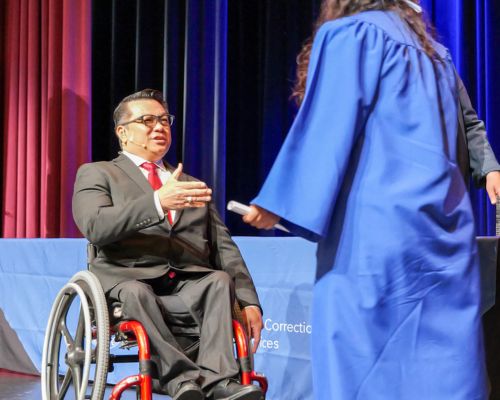
Q&A with Orange County Superintendent of Schools Stefan Bean about the 5-3-1 Strategic Plan and the new school year.
Parenting OC: It’s been a year since you’ve been county superintendent. What is your overall assessment of the past year?
Stefan Bean: This first year has been incredibly energizing. I’ve had the opportunity to meet so many amazing educators, students and families across Orange County, and what stands out most is their passion — for learning, for supporting one another and for doing what’s best for kids.
It’s also been a year of listening and building. We launched a strategic planning process early on that brought people together from across our county to identify shared goals, and that work really has set the stage for what’s next.
POC: What were the biggest successes and challenges?
SB: One major success has been the launch of our 5-3-1 Strategic Plan, which was shaped through thoughtful collaboration with district leaders, educators and community partners.
What’s been especially encouraging is how often I hear it referenced — not just within OCDE, but out in the community. During visits to schools and meetings with educational leaders, language from the plan is showing up in real conversations and real work. That tells me it’s resonating. People see themselves in the plan — their priorities, their hopes for students — and that shared sense of purpose is powerful.
As for challenges, I’d say navigating the pace of change. The world is evolving quickly, especially with new technologies, and we’re balancing the need to innovate with the need to support educators in real time.
POC: Can you tell us about the 5-3-1 Plan?
SB: The name reflects the structure of the plan itself: It features five forward-looking initiatives, three objectives focused on how we support schools and districts, and one bold, county-wide goal that we’re rallying around together.
The 5-3-1 Plan is our roadmap for aligning efforts, building on what’s working and tackling challenges head-on. But at its core, it’s really about students — supporting their success, their growth and their readiness for the world beyond school.
The five initiatives center on areas where we see the greatest opportunities to make an impact. That includes fostering emotional intelligence, helping students build so-called soft skills like empathy, self-awareness and resilience, which are essential for healthy learning environments and strong relationships. Other initiatives seek to expand career and technical education so more students graduate with real-world options; integrate artificial intelligence in thoughtful, responsible ways; strengthen school and student safety through more coordinated systems; and create innovative funding opportunities to support promising ideas and practices.
The three support objectives are really about how we serve our districts. They include providing academic support with rigor, continuing our long-standing role in offering legal, legislative and fiscal guidance — which we felt was important to formally anchor in the plan — and delivering customized assistance to local superintendents and charter leaders.
Finally, the one big goal is focused on improving outcomes and expanding opportunities for every student in our alternative education programs — known as ACCESS — by 2030.
POC: How were each of the five initiatives identified and what will be the process for putting them into action?
SB: Each of the initiatives — emotional intelligence, career education, artificial intelligence, school safety and funding innovation — came directly from conversations with school leaders, educators, students and community partners. We asked: “What are the game-changing areas where OCDE can lead and support our districts?” These five rose to the top because they touch every student and every campus in some way.
As for implementation, we’re taking a phased approach by identifying internal and external leads, building teams around each initiative and focusing on clear, measurable steps. We’re already seeing that in action with our new ACCESS 2030 Vision, which brings many of these same ideas to life for our alternative education programs.
POC: What do the three support objectives mean in practice?
Think of these as the backbone of our service to local schools. In addition to providing direct instruction to some of the county’s most vulnerable student populations, OCDE exists to support Orange County’s 28 school districts with the essential services they need to operate. That includes professional development, high-speed internet access and security, legal and fiscal guidance, payroll systems, communications support, assistance and approval of Local Control and Accountability Plans and student enrichment opportunities.
“District and charter support” means we’re actively listening and responding to what local superintendents need. “Academic support with rigor” reflects our commitment to helping districts raise outcomes through strong instruction, targeted training, customized data analysis and hands-on technical assistance. And “legal, legislative and fiscal support” is about equipping school leaders to navigate increasingly complex policy, funding and compliance challenges. The goal is to meet schools where they are and tailor support to fit.
POC: The 1 Big Audacious Goal of ACCESS by 2030 certainly is big. How will this happen by 2030?
SB: Absolutely — the scale and audacity of this goal are intentional.
The ACCESS 2030 Vision is about transforming outcomes for our county’s most vulnerable and resilient students. We’ve developed five priorities that include career readiness, rigorous instruction, wellness and safety, resilience and practical life skills — and each one has specific goals and metrics.
We’re also bringing in talented new leaders and creating dashboards to track progress, and we are involving students and families as co-creators. This isn’t just a vision statement — it’s a movement, and we’re all in.
POC: As the new school year begins, how do you see this plan starting to take effect?
SB: We’re already seeing the momentum. We’re aligning all of our work around the key areas of the 5-3-1 Strategic Plan, and nearly everything we do can be tied back to one or more parts of the framework.
In presentations and planning sessions, staff are eager to show those connections — not just to check a box, but because the plan reflects the priorities we’re already passionate about. It’s also being reflected in our professional development sessions and trainings, which are grounded in the key initiatives and helping teams make those connections in their day-to-day work.
At the same time, ACCESS sites are piloting new programs aligned with the 2030 vision, and our internal teams are building out the supports needed to keep this work moving forward with clarity and purpose.
POC: Do you have intermediate goals — for example, where do you want to be with the plan by the end of this upcoming school year?
SB: We want every initiative to have a clear structure and implementation roadmap. We also want to see traction — new CTE pathways being explored, AI pilot programs underway, expanded trainings for staff and stronger school safety protocols in place. With ACCESS, we’re aiming for measurable increases in attendance, student engagement and completion of life skills programming.
POC: The world is constantly changing. Does the plan account for pivots?
SB: Yes — very much so. The 5-3-1 Plan is built to be flexible. The five initiatives give us a clear north star, but the way we get there can shift based on what students and educators need most in the moment. It’s a framework, not a script.
POC: How will schools be tackling issues like AI and school safety on a micro level?
SB: Every district and charter school is like a boat charting its own course across the harbor. The destination — improved outcomes for students — may be shared, but each district and school will have different approaches to get there based on their needs, values and resources. Our role at OCDE is to provide whatever support they need along the way.
We do have professionals at OCDE who are at the forefront of AI in education. They’re exploring how these tools can be used to enhance teaching, support personalized learning and make operations more efficient — and they’re serving as a resource for our districts as they explore and adopt these technologies in ways that fit their own contexts.
At the site level, this work will take different forms. It might look like new instructional tools powered by AI, or stronger safety systems and protocols being implemented. We’re supporting that work with professional development, integration guidance and funding models to help bring these big ideas to life in practical, meaningful ways.
POC: Can parents expect to learn more about the plan at their schools and how it will work locally?
SB: Our hope is that families will see and feel the outcomes of this work — even if they’re not hearing about the 5-3-1 Plan by name.
In a healthy school environment, the focus is on building authentic relationships that support quality teaching and learning, and that’s where we want families to be most engaged. The plan itself is a county-level framework designed to guide and support the work happening in schools, but the real measure of its success will be in how students experience growth, connection and opportunity in their daily lives.
Districts may draw from the plan in ways that align with their local goals, and we’re here to help support those efforts.
POC: What do you hope to accomplish in general by the end of this new school year?
SB: This year, we want to build strong foundations — across all five initiatives, across all districts and especially within ACCESS. We’re aiming for greater alignment, deeper engagement and early wins that demonstrate this work is making a meaningful difference for students.
We’re also committed to transparency. Our outstanding data team is in the process of developing key performance indicators that will help us measure progress and stay accountable to our goals, and we’ll be sharing those results as they take shape.
POC: Anything else you’d like to share?
SB: What’s really stayed with me this past year is how inspiring it’s been to meet with educators, support staff and leaders at every level across Orange County. There’s something special here — a deep commitment to students, a belief in continuous improvement and a willingness to collaborate in meaningful ways.
We believe we have the people, the passion and the resources to take our place as a statewide and even national leader in public education. The 5-3-1 Strategic Plan is one way we’re organizing that energy and pointing it in the same direction — toward better outcomes, stronger relationships and real opportunities for every student.
For me, this work has always been about standing up for kids, especially those who face the greatest challenges. It’s about making sure every student feels seen, supported and valued. That’s my “why,” and it’s what drives every conversation, every decision and every goal we set. Because at the end of the day, if we’ve got their backs, we’re doing the work that truly matters.
By Jessica Peralta





Leave a Reply