
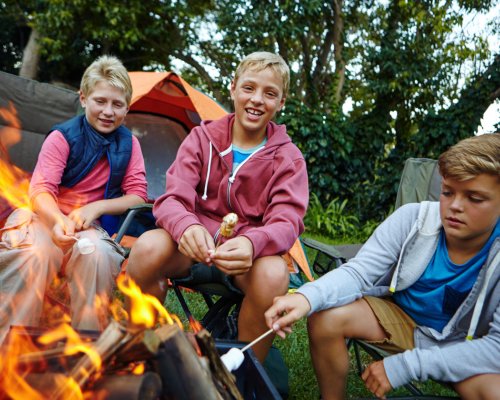
Why camp still matters for today’s modern kids.
Parents often think of summer camp as a nostalgic throwback — s’mores, songs and mosquito spray. But in a world of screens, stress and social pressure, that old-fashioned campfire glow is doing something quietly revolutionary.
When you send your child off for the classic camp experience, you might not realize that you’re also enrolling them in a hands-on workshop for modern life. While the canoes still glide across the lake, today’s camps have quietly evolved, positioning themselves as a strategic antidote to some of the most pressing challenges facing kids today.
Think of today’s camps not just as a vacation, but as a kind of intervention. In an era of smartphone addiction, rising anxiety and shortening attention spans, the camp environment is uniquely equipped to deliver a dose of what our children are missing most.
The Digital Detox (By Design)
Let’s start with the most obvious shift: the silence. Many camps are intentionally “unplugged,” so kids enjoy the absence of pings, dings and endless scrolling. In a world where the average teen spends several hours a day on media, this isn’t a quirky policy. It’s a neurological reset.
A study published in Computers in Human Behavior found that even five days at a device-free outdoor camp significantly improved children’s ability to read nonverbal emotional cues. Without a screen in their face, the kids were better able to notice visual details, such as a stifled laugh, a hesitant smile or a posture of inclusion.
Dr. Jyothsna Bhat explains the results this way: “It appears that live and in-person interactions are ultimately more fulfilling and satisfying. This is particularly true as we look at the roles that empathy and social reciprocity play.”
Kids with fewer digital distractions return home not just with stories, but with sharper attention and a renewed ability to connect.
Once they reconnect with the real world — and each other — another shift begins: their stress levels start to drop.
The Anxiety Antidote
Many children live with an undercurrent of anxiety. The pressures of school, social media and an overscheduled life can leave them feeling constantly on edge. Camp provides a sanctuary through structure.
The camp day is a masterclass in rhythm and reliability. Wake-up, flag-raising, meals, activities and lights-out follow a predictable pattern. This consistent framework is profoundly calming for an anxious mind. There’s no room for the constant “what’s next?” anxiety that can creep in at home.
And the benefits of outdoor physical activity on mental health are undeniable. Research from the University of Michigan’s School of Public Health shows that group-based activity in natural settings — exactly what camp provides — is linked to lower cortisol levels and reductions in self-reported anxiety. The combination of sunlight, movement and green space acts as a natural mood stabilizer.
When kids are calmer and more centered, they’re ready for something even more transformative: challenge.
Teaching “Hard Fun”
Today’s parents are often accused of clearing every obstacle from their child’s path. Camp, however, is in the business of carefully placing them there. This is the philosophy of “hard fun.”
Think of a child staring up at a 40-foot rock wall. It’s intimidating. They might want to quit. But with the encouragement of peers and a patient instructor, they take one step at a time. Reaching the top — or even making it halfway — unleashes a euphoric sense of accomplishment that no effortless victory can provide.
This is the essence of grit and perseverance. A study out of the University of Pennsylvania found that grit is a more reliable predictor of success than IQ.
Thankfully, camp is a grit-building factory. Whether it’s mastering the tricky fingerings of a new song on the guitar, finally lighting a fire in challenging conditions or resolving a disagreement with a cabin-mate, camp is a series of real-world challenges that teach kids they can struggle and succeed.
Life Skills 101
While you’re hoping they’re having fun, camp is secretly running a boot camp for executive functioning — the mental skills that include working memory, flexible thinking and self-control, all essential for adult life.
At camp, there’s no parent to remember the water bottle, find the lost sock or remind them to be on time. The responsibility shifts to the child. They must keep track of their own belongings (working memory), adapt when a thunderstorm moves the barbecue indoors (flexible thinking) and manage the impulse to grab the last pancake and learn to take turns (self-control).
These lessons aren’t taught through lectures. They’re lived. A child who forgets to hang up their wet swimsuit will discover a cold surprise the next morning — a natural consequence far more effective than any parental reminder. They learn to show up on time because if they’re late for the canoe trip, the canoe leaves without them. These are low-stakes, high-impact lessons in personal responsibility.
By Shannon Dean



Leave a Reply