
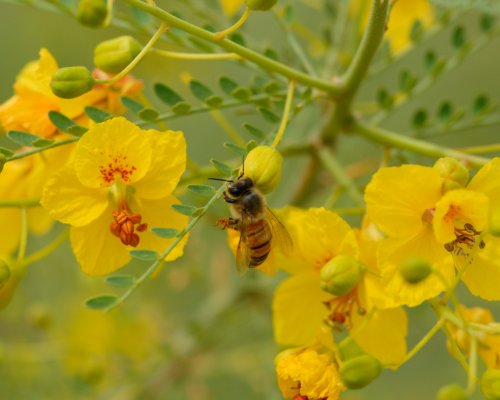
Discover the secret world of pollinators.
Next time you are outside, look down! If you look closely, you just might spot a team of tiny superheroes in action. Pollinators — such as bees, butterflies, birds, bats and even some scorpions — are using their incredible superpowers to keep nature in balance. They zip, hop and flutter from flower to flower, carrying pollen that helps plants grow fruits, seeds and new blooms.
While roughly one-third of the food we eat comes from pollinators, these miniature heroes do more than provide us with delicious meals, they also keep ecosystems strong. Healthy plants clean the air, stabilize soil and provide materials like fibers, oils and seeds. Without pollinators, the ecosystem, the plants, the animals and our natural resources we rely on every day would all be at risk.
Now it’s your turn: You and your family can join the mission and help pollinators thrive this spring and summer.
Join the Team of Nature’s Superheroes
Pollinators are nature’s tiny but mighty superheroes, and you and your family can help them on their essential mission. Try some of these fun ways to give pollinators a boost this spring and summer:
1. Plant a pollinator playground. Even small patches of native plants can make a big difference. You can use your whole garden, an apartment patio or even a small window box to create a healthy home for pollinators. By filling your garden with native plants, you’ll provide them essential resources like nectar, pollen and places for their larvae to grow.
Feeling crafty? DIY some plant labels so you can remember the names of each plant or paint welcome signs for the pollinators.
2. Become a pollinator detective. Grab a magnifying glass and start exploring. Count how many pollinators you can find in your backyard, at the park or on a walk. Record your findings in a notebook or take photos of what your family finds.
Take it to the next level and become a citizen scientist. Record sightings of monarchs and milkweed with the Western Monarch Milkweed Mapper Project to help scientists study migration patterns and population trends.
3. Make a natural weed spray. Turn everyday household ingredients into a simple, non-toxic, biodegradable weed spray. This easy DIY is a small, hands-on way to protect soil, water and the wildlife that depend on them.
Ingredients:
- 1 gallon white vinegar (45%)
- 1 tablespoon dish soap
- 1 cup Epsom salt (optional)
Directions:
- Pour the vinegar into a large container.
- Stir in the dish soap.
- Optional: Add Epsom salt and let sit overnight to fully dissolve.
- Mix well and pour into a spray bottle or garden sprayer.
How to Use:
Apply on a warm, sunny day for best results. Spray directly onto weeds you want to remove, avoiding contact with plants you want to keep. Let the spray sit overnight and reapply after a few days if the leaves aren’t completely brown.
Tip: To avoid overspray, cut the bottom off a gallon jug and place it over the weed as a shield while spraying.
Precautions:
- Wear gloves and avoid contact with skin, eyes and clothing.
- This solution can harm any plant it touches — use carefully.
- Rinse metal sprayer parts after use to prevent corrosion.
- Avoid overuse in soil, as vinegar can disrupt pH and beneficial microbes.
Note: This mixture does not kill roots or prevent new weeds from growing.
Jenny Lynn Robinson is the senior Communications & Marketing manager at The Living Desert Zoo and Gardens. She harnesses the power of storytelling to support the zoo’s mission of desert conservation through preservation, education and appreciation. livingdesert.org/pollinators







Leave a Reply
You must be logged in to post a comment.