
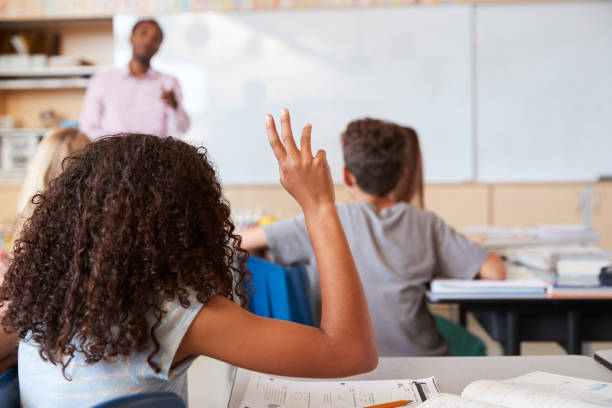
Get some insights from these high school leaders.
The transition from middle school to high school marks a major shift, both academically and socially. For today’s students, the high school experience can look vastly different from that of their parents, offering a dizzying range of opportunities across public and private institutions.
From performing arts academies and dual-enrollment programs to athletic powerhouses, students and their families now navigate an increasingly competitive and rapidly changing college and career landscape. We spoke with three high school leaders who shared their insights on how families can help their children navigate this transition through academic preparation, intentional choices about extracurricular activities and the equally important but often less tangible work of building social and emotional readiness. Here, our experts discuss the skills, values and practices that can set students up for success in high school.
Building the Skills for High School Readiness
Academic preparation can take many forms, from developing organizational and time management skills, to taking advantage of academic prep programs offered at middle schools. Shelley Stanphill, a learning specialist at the Orange County School of the Arts (OCSA) encourages students to develop the following skills: self-advocacy, resourcefulness and time management.
“Faculty and staff overwhelmingly want to help students, but they don’t always know your specific struggles or needs,” she says. “Learning how to clearly communicate and respectfully partner with your teachers is the best thing you can do to invest in your future academic success.”
Stanphill also recommends using middle school to experiment with different planners and study routines. Whether it’s a spiral-bound planner, a digital app or a stack of Post-its, find the system that works for you and develop a consistent routine for maintaining it.
David M. Martinez, Ed.D., principal of Early College High School, says that the development of Writing, Inquiry, Collaboration, Organization and Reading skills — core components of the AVID (Advancement Via Individual Determination) program — helps students prepare for the rigor of high school coursework. These skills teach students how to come to class prepared, manage their time effectively and create useful notes to support their study habits.
Staying engaged in the classroom and demonstrating a willingness to learn and work hard are qualities educators value in their students, says Nathan Underwood, director of admissions at Mater Dei High School. Incoming students at the Catholic high school come from a wide range of academic backgrounds, from large public middle schools to homeschool environments.
“Strive to be the best student that you can be,” says Underwood. “For some students, that means getting all ‘A’ grades on your report cards. For others, that means getting ‘B’ grades or something different. An important characteristic in a good student is the willingness to learn and work hard.”
Beyond Grades
While grades may reflect academic readiness, extracurricular activities give students the opportunity to explore their interests in a supportive, low-pressure environment.
When it comes to choosing these activities, let your student be guided by their own curiosity, not just what looks good on paper.
“Try out different activities, not for the sake of expanding your resume, but for the sake of expanding yourself,” says Stanphill. “Don’t just give up the moment it gets hard — it’s OK (even good) not to be the best at everything.”
And in an age where algorithms and social media are competing for student attention, sometimes the best activity can be to do nothing at all.
“Downtime is essential for creativity, processing and physical/emotional well-being,” says Stanhill.
Participating in community service and volunteer work contributes to a more well-rounded student experience, says Underwood, who urges involvement outside of the classroom.
“Being a faith-based school, we place a heavy emphasis on service and giving back to the communities we come from.”
For some students, extracurricular activities can also offer opportunities to gain leadership skills and employ resiliency. Athletics, campus club and community service are some such settings where these skills come into play, says Martinez.
Emotional Readiness
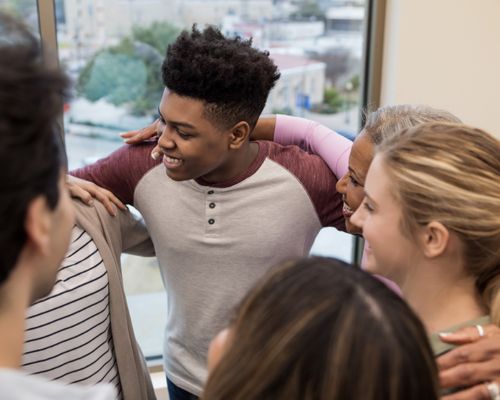
The leap from middle school to high school can feel as vast as the Grand Canyon for many students, with larger campuses, more demanding coursework and shifting social dynamics. Luckily, parents and families can create strong support systems to help their students navigate their new environment.
Perhaps the most important thing to maintain is perspective, says Underwood.
“Remember that every incoming ninth-grader is going through the same adjustment, so their son or daughter is never going through this transition alone.”
At the Santa Ana campus — the largest private school in Orange County — social activities for students and their families are scheduled before the start of the school year, so connections are made before students set foot in their new classrooms.
At Early Middle College High School, middle school students are invited to attend the campus’ spring open house to become more familiar with the school. New students are also assigned upper-class student mentors. Martinez encourages parent involvement.
“Parents should not shy away from contacting their child’s guidance counselor. These specialists can be instrumental in assisting students who may have challenges adjusting to the new social environment.”
Connecting with campus clubs and programs can help ease the transition as well.
Support at home is important too. For many students, the teen years are a time to experiment with different social identities. The best thing families can do is offer a safe and supportive space as their kids try out different social groups and roles.
“Be a good listener, and don’t get entangled with your kid’s drama,” says Stanphill. “Give them the space to identify which friendships are uplifting, set their own healthy boundaries, and reflect on the impact of their words and actions.”
Preparing with Purpose and Perspective
Helping students move from middle school to high school is a process that encompasses skill-building, curiosity and character. The leaders we spoke with agreed: Success in high school starts with the basics. Organization, time management and self-advocacy aren’t just academic tools — they’re essential life skills. Being able to ask for help, manage their time and stay curious can set students up for a rewarding experience in high school and beyond.
While it’s tempting to maintain a checklist of academics and extracurricular activities, social and emotional readiness must be cultivated as well. The leap into high school brings new social circles, shifting identities and a questioning of one’s purpose in life. Parents can cultivate a loving and supportive environment at home by listening to their kids and helping them solve problems in a way that respects their agency and independence. Schools can help too, through mentorships and community events that remind students they’re not navigating this change alone.
By Laura Rico





Leave a Reply
You must be logged in to post a comment.